
Thrift stores have grown in popularity in recent years. According to Capital One Shopping, the market value of thrifting since 2018 has grown to 143.6%, which translates into $61 billion in 2026.
In 2019, Oxfam, a UK organization that fights to end poverty and injustice globally, created the campaign Second Hand September. During the month-long event, people are encouraged by the nonprofit to buy at secondhand clothing stores to crusade against the harmful ways the fashion industry impacts society, including labor exploitation and environmental pollution.
Even without campaigns, the growth in stores selling preloved clothing has numbers that have gained attention of the industry. The growth of thrift stores in Q2 of 2025 was four times greater than the amount of foot traffic in Q2 of 2019, according to Lila Margalit in “Thrift store visit growth outpaces apparel as tariffs loom.” General clothing stores saw merely 9.5% growth in customers.
Inflation has contributed to retail store prices increasing between 20% and 30% after the COVID-19 pandemic, according to Forbes.
Plato’s Closet employee Serina Scott says more people are buying clothes from secondhand stores, especially for the designer clothes that are offered.
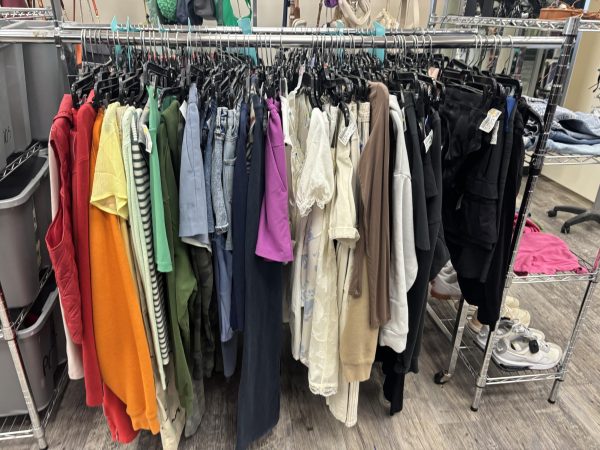
Goodwill, another national chain thrift store in the Plymouth-Canton area, focuses on providing sustainable items or services in order for individuals to have a better quality of life. It also partners with nonprofits and offers workplace training programs for people who face employment challenges.
Rory Gerlach, a frequent Goodwill shopper, goes thrifting to inspire her creativity. “I go around to a bunch of different stores, and I find a bunch of cute stuff that I can cut apart and make into something new.”
According to Capital One Shopping, 83% of Gen Z individuals in the U.S. during 2026 will purchase clothing items, or wish to, from thrift stores.
It’s not just in-person thrifting that’s become a trend. Depop, a third-party online platform that allows people to buy and resell clothes, was founded in 2011 and has recently gained popularity. Depop’s targeted demographic is Gen Z, with 90% of its users under the age of 26.
While Depop is similar to Poshmark, another platform where users sell clothes, Depop’s algorithm is influenced by social media trends that cater to a GenZ audience, as reported by Max Berlinger in the New York Times in “How Depop captured the heart of Gen Z.” Although some users on Poshmark are Gen Z, Poshmark’s feed is more centered around finding clothes for older generations, according to Nylon.
Each thrift store determines pricing for its clothing items. Some do this by providing sales or discounts. Plato’s Closet’s discounts aren’t focused on specific clothing items, but rather what would draw customers into the store.
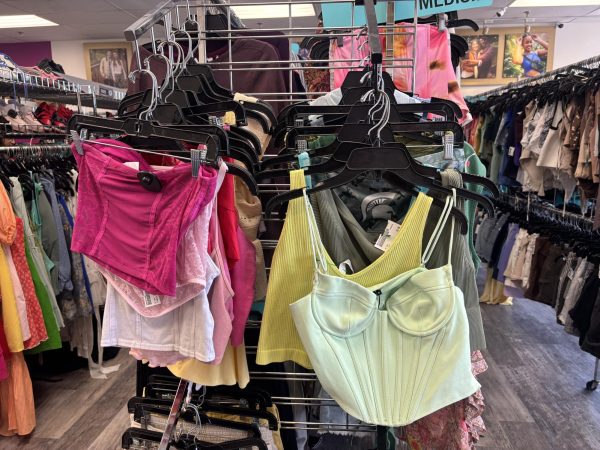
“We have different events depending on what the season or month is, or what we desperately need,” said Scott. “Usually, we would clearance items that haven’t been sold for a while, or if it’s in bad condition, we would clearance it so [customers are] not paying the full price.”
Plato’s Closet recently stayed open late for its Midnight Madness sale on April 10, pricing all clearance items at 90%. Plato’s Closet also has specialized sales for popular upcoming events, like playoff games for the Detroit Tigers or Detroit Lions.
Although online thrifting has increased, some shoppers prefer the experience of shopping in person.
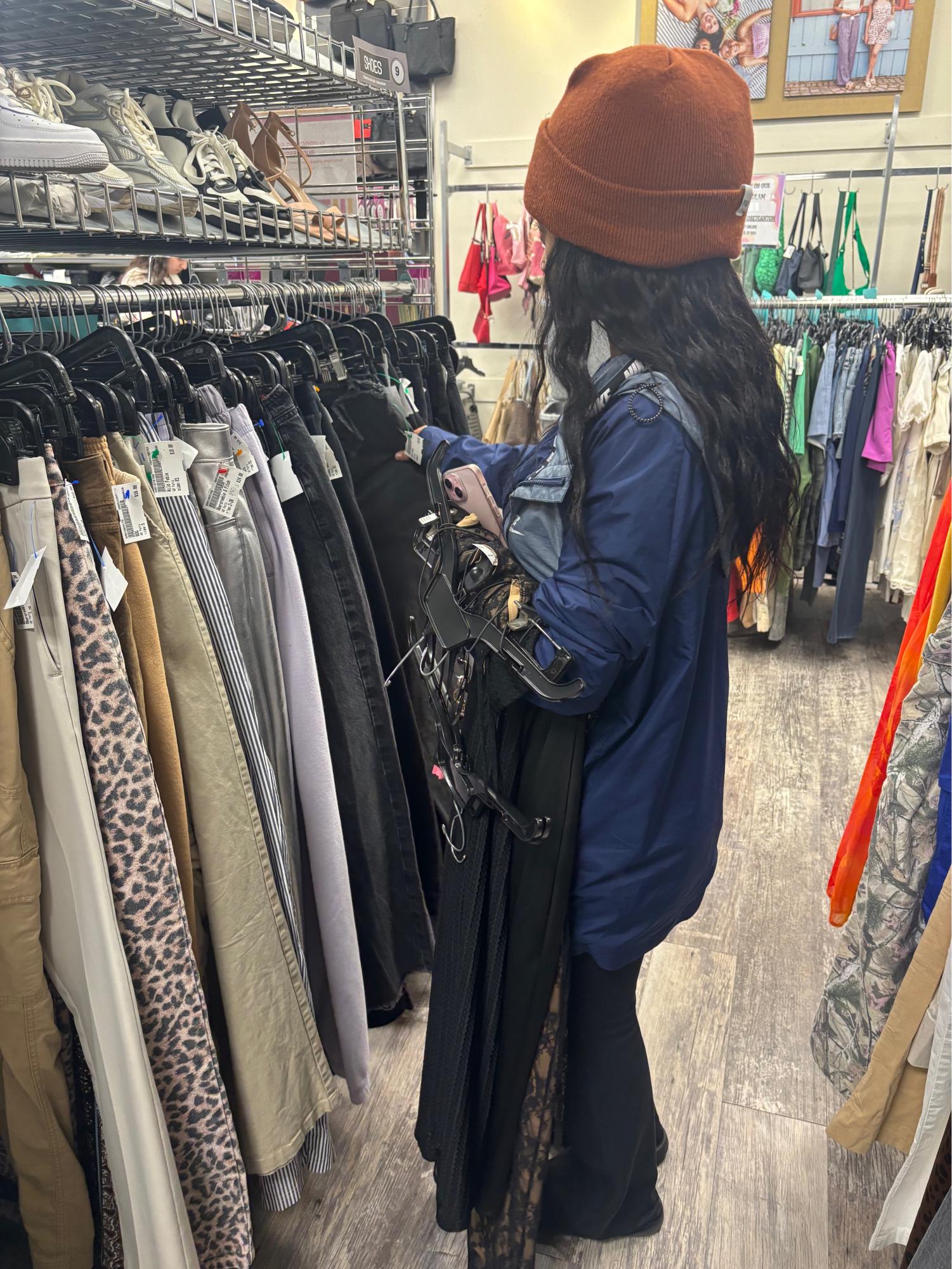
“I just feel like there’s more of a fun experience, kind of not knowing what you’re gonna get, and also exploring all these different styles;” said Canton senior Hana Madkour. “Because you could find something that you don’t think you’ll like, but once you try it on, you’re like, ‘I love this.’”
Capital One Shopping’s study shows that 45% of American consumers prefer to shop in-person at secondhand clothing stores. Still, reselling clothes online is expected to grow annually by 13% in 2029.
Shoppers are thrifting more than ever, with the U.S. secondhand clothing store market projected to reach $74 billion by 2029. No matter the reason people decide to thrift, the secondhand clothing market will only continue to grow.