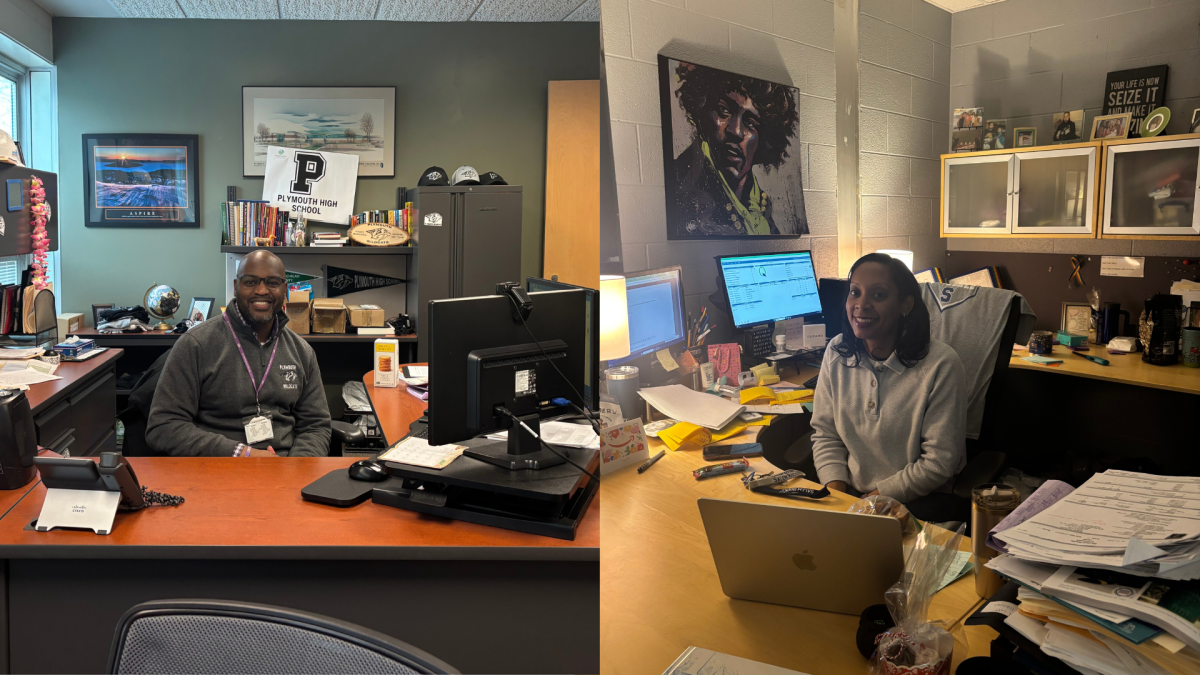
February centers on appreciating the vital roles and triumphs of Black individuals in shaping our society. At the Park, it is also a reminder that Black history is not only something to study, but something that is actively lived through leaders Gregory Anglin and Angel Lett who guide students every day.
“Black History Month is an opportunity to recognize contributions and achievements of Black Americans, and really just an opportunity to learn,” said Plymouth principal Gregory Anglin. “I see it as a learning opportunity to really see everyone’s contribution, and the value added by so many different people over the course of history of the United States.”
Anglin’s approach to leadership is shaped by his own experiences as a student and by the educators who supported him. “[I try] to be what I needed when I was in school,” he said. “I try to be present, I try to be available for students.”
Anglin’s leadership philosophy centers on addressing the specific requirements of a diverse student population. “One of the key reasons why I got into leadership is to make sure all students have a voice. So really focus on the equity aspect, making sure students get what they need,” said Anglin. “As large as we are, there’s students with so many different needs.”
Growing up surrounded by Black male educators left a lasting impact on him. “I had a lot of males, and specifically African American males in my development, from elementary to middle school,” Anglin said. Later in his life after leaving middle school, he said he realized how uncommon that experience was, adding that “just kind of seeing people that look like you in those positions was kind of valuable in our development.”
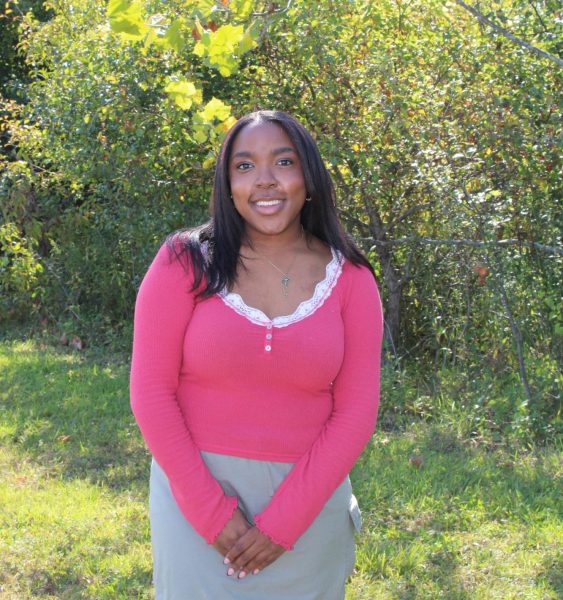
For Salem Assistant Principal Angel Lett, Black History Month not only allows for reflection, but fosters “thinking about where we are presently and where we have come from.”
Before stepping into a role, Lett says it is important for leaders to know who they are as people. “I think in order to be in any leadership position, you have to be comfortable and aware of what your identity is,” she said. Without that understanding, she explained, “you could be driven in all of these different directions and essentially exhausted.”
For both leaders, the most meaningful moments are rooted in student growth. Anglin described watching students transform over four years of high school as one of the most rewarding parts of his job. “You see kids freshman year, and you see their struggles,” he said. “You see some students who couldn’t quite figure it out, maybe were into drama, and then they’re walking across the stage.”
Those connections often continue long after students leave P-CEP. Lett spoke about former students returning to share their accomplishments. “[There are] ones who come back to say, ‘Hey, I’m graduating from MSU,’ or ‘Hey, I’m graduating from Wayne State,’ or ‘Hey, I’m in med school now,’” she said.
Representation remains a powerful theme throughout both leaders’ experiences. Anglin said seeing educators who looked like him shaped his sense of belonging. “It made me feel more welcome or more comfortable in a certain environment,” he said.
As the only African American woman on the Park’s leadership team, Lett understands the significance of visibility. “I really hope that students look at me and they feel a sense of community,” she said. “I hope they feel supported. I hope they feel like they can trust me to meet their needs.”
Anglin emphasized that the presence of Black staff members is not only important for Black students, “it’s important for every student to see that. It’s important for every student to see the different, unique depth of staff members.”
Leadership, both Anglin and Lett emphasized, is not limited to titles. Anglin encourages students to take charge wherever possible. “Just always put yourself in positions to develop those skills. There’s a lot of opportunities to demonstrate leadership,” he said. “Don’t be afraid to jump into those.”
Lett highlighted both the opportunity and responsibility within education. “Education is so vast,” she said, while also recognizing that “sometimes when you’re in places, especially the makeup or the demographics of places [where] you may work, you may be one of the only people or sources where kids can find community.”
Since Lett has stepped into her career in education, there has been reformation in the field. “Seeing the authentic push for inclusivity and culturally responsive pedagogy has been one of the most significant changes that I have witnessed, professionally and personally,” said Lett. “Students have many assets that come from their lived experiences and their cultural heritages. I want to make sure that learning remains a platform where people can bring their whole self right in the classroom.”
As Black History Month invites reflection, the leadership of Anglin and Lett demonstrates how representation extends beyond symbolism. Their presence communicates possibility, belonging, and support, messages that may shape how students at P-CEP see themselves long after February ends.