
After a month of fasting from sunrise to sunset, the end of Ramadan has come to a close as Muslims begin to celebrate Eid al-Fitr, which in Arabic means “Festival of Breaking the Fast,” a three-day holiday for prayer, charity and family connection.
Every year, nearly two billion Muslims around the world celebrate Eid, which means “feast.” For Canton English teacher Amanda Chaaban, she describes Eid as an accomplishment. “[Eid] is more like a reward, because you fasted an entire 30 days,” she said, “and that is a hard thing.”
Canton senior Raneem Haque, Muslim Student Association’s treasurer, has a similar reaction.
“It’s kind of bittersweet because it’s like the end of Ramadan,” Haque said. “But, then, it’s also really nice because it’s like a final celebration to say ‘bye’ to the month.”
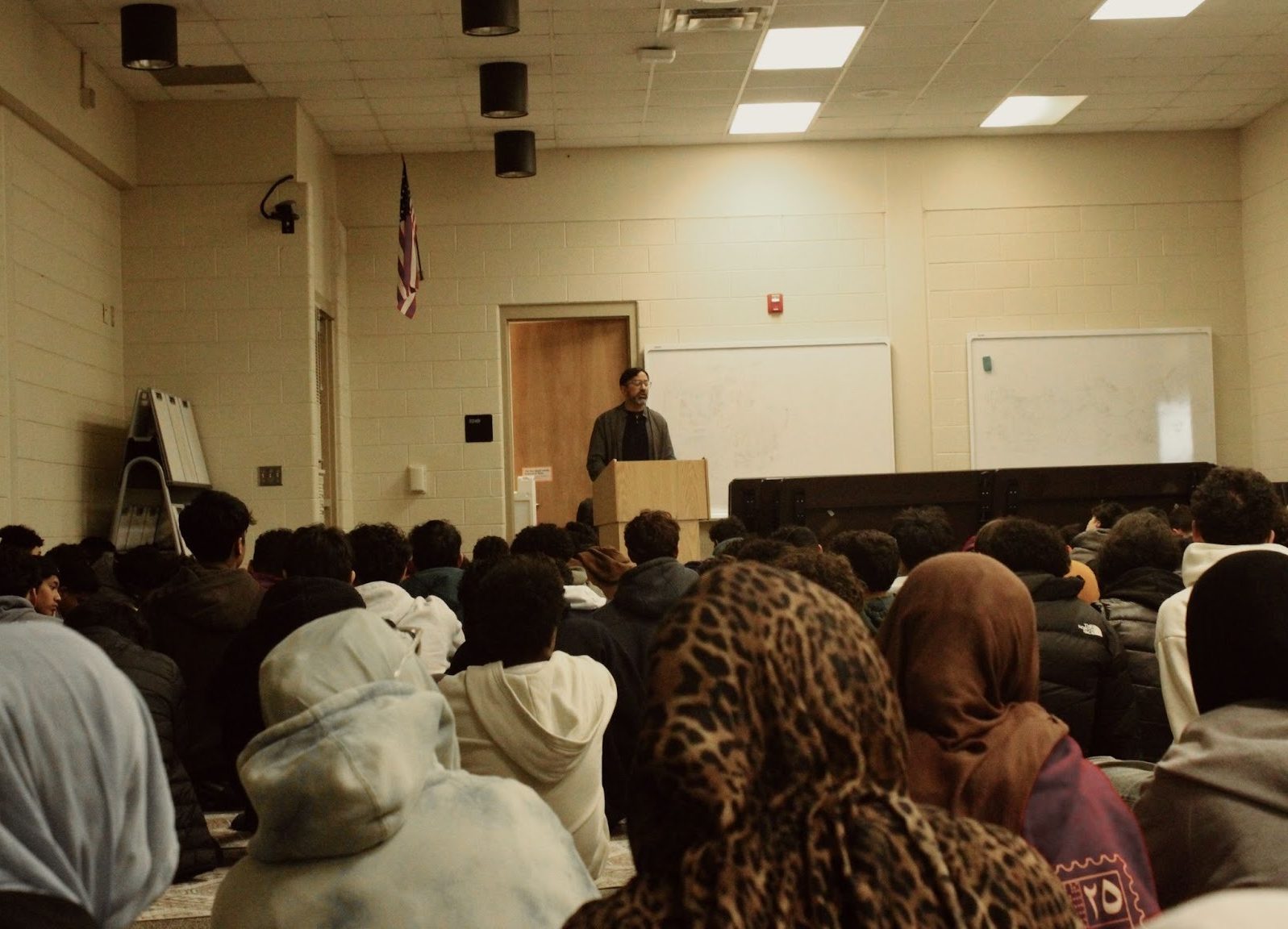
One of the main traditions to do on Eid is “salah,” or prayer. On the morning of Eid, many attend a mosque for a special prayer where Muslims recite two “rakats” from the Quran.
Muslims believe that in ancient times, the tradition began with the prophet Muhammad who would lead a congregational Eid prayer with his friends and family, which was then followed by a “khutbah,” or sermon. Today, many continue this tradition and follow the way of life, which is commonly known as “sunnah.”
As a Muslim, it is mandatory to do an Eid prayer. Salem senior Ammar Nusier, the MSA guys’ president, said that he often goes to the mosque in the morning to pray. “Me and my family in the beginning usually go to a much larger facility than the usual mosque to go for Eid prayer,” he said.
Nusier said that he enjoys going to the mosque as it brings him to a closer relationship with God. “It’s a day that, God, Allah, he tells us that we need to be very happy on that day.”
In addition to Eid prayers, some Muslims go to Mecca to perform Umrah, a pilgrimage that runs a few hours and can be done any time of the year. While it is not as extensive of a requirement as the Haj, one of the Five Pillars of Islam, many people still go to experience it.
“[Umrah] was a very rewarding experience for me,” said Canton senior Nadia Sinaph, girls’ president from MSA. “You get to immerse yourself in your religion and you don’t have to focus on anything else for those days.”
Beyond prayer, Eid is also a time for connection. Families will often exchange gifts, wear new clothing and share meals with one another.
Canton senior Zaina Husian, MSA girls’ public relations officer, said that celebrating Eid with others, including friends and family, feels vibrant. “Very lively, and community-based,” she said. “It’s a lot of fun. Everybody comes together to celebrate.”
While Eid is a time for celebration, Eid comes after a month of fasting. During the fast, Muslims are prohibited from eating and drinking until Maghrib, one of the five prayers that Muslims do everyday.
Many students said that it was hard to fast during Ramadan due to balancing both work and school. For Nusier however, the main challenge was to avoid eating while others were.
“I don’t have lunch with all of my Muslim friends. I end up sitting and watching them all eat in front of me,” he said. “The way I overcame it, though, is that I just took food home and just ate it later. I knew I was going to eat it eventually, just not now.”
For many, Eid is time for spiritual growth, but Eid also serves as a reminder of discipline and gratitude.
“It’s really just a time of family reflection, getting together with the community, and basically just celebrating the end to Ramadan,” said Chaaban.
The Muslim Student Association club meets Fridays at Plymouth 223B after school from 2:30 p.m.-3:30 p.m.