At a campus that is no stranger to lockdowns, P-CEP students rely on school security and the Canton Township Police Department to keep them safe.
The P-CCS district is equipped with almost 1,700 Avigilon security cameras with weapon detection and clothing recognition, according to Eric Kolke, P-CEP Safety and Security manager. Both the interior and exterior of P-CEP are monitored with the devices.
Several security guards review the live video feed using monitors around the clock. “There’s 17 [security guards] that are working during the daytime, and then we have an afternoon shift and also a midnight shift,” Kolke said.
The 24-hour monitoring of the campus aids the security team during events. On December 9, 2021, P-CEP students were held in their classrooms for over three hours after an unconfirmed report of a weapon sighting. The event occurred in the wake of the shooting deaths of four students and injuries of eight other victims at Oxford High School on November 30, 2021.
No lockdown in the P-CCS district since 2021 has matched its length; no consequent panics in reaction to lockdown events that lead to P-CEP classes being canceled as on December 10, 2021, have been repeated.
To help students and staff practice safety procedures, all school buildings in P-CCS have regularly scheduled lockdown drills as mandated by state law.
Every report of suspicious activity does not necessarily result in a lockdown at P-CEP. “We get reports from a student, ‘Hey, this kid was talking about a gun.’ Well, we pull that student in immediately. We search them, make sure there’s nothing in their bag, and we asked them about it, and they said, ‘Yeah, talking about playing Call of Duty, you know, with my friends last night,’” Kolke said. “That happens a lot, and I’m not saying that’s a bad thing. I want people to report that to us so we can verify that.”
Although Kolke holds authority in these emergency situations, he urged students to disclose concerning information to any adult they can find. “If you see anything suspicious, we don’t want you to try to find security. Go to a teacher, go to an administrator. If you see security in the hallway, by all means. If you’re near the security office, please,” he said. “Don’t take it as nothing. We hear that all the time. ‘We didn’t think it was anything big.’ Let us decide that.”
Kolke said that since he began working at P-CEP, security guards have undergone further training in de-escalation, Stop the Bleed, and Children’s Therapy Innovations, which Kolke describes as control management for disabled students. Additionally, every August, security guards do active shooter prevention in which they watch someone pretending to be an attacker on camera, Kolke said.
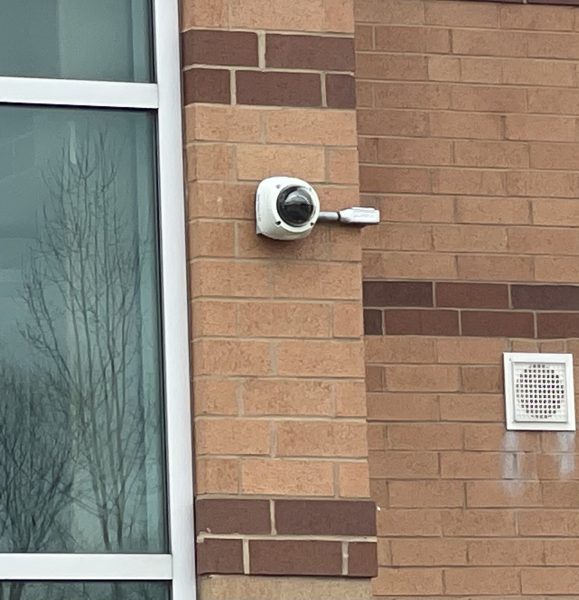
One person cannot watch the feed from every part of the campus at all times. Instead, Kolke says, “We have it set up in there, called the Focus of Attention, where it’ll alert to [the person watching the monitor] that, ‘Hey, take a look at this. This doesn’t look right.’”
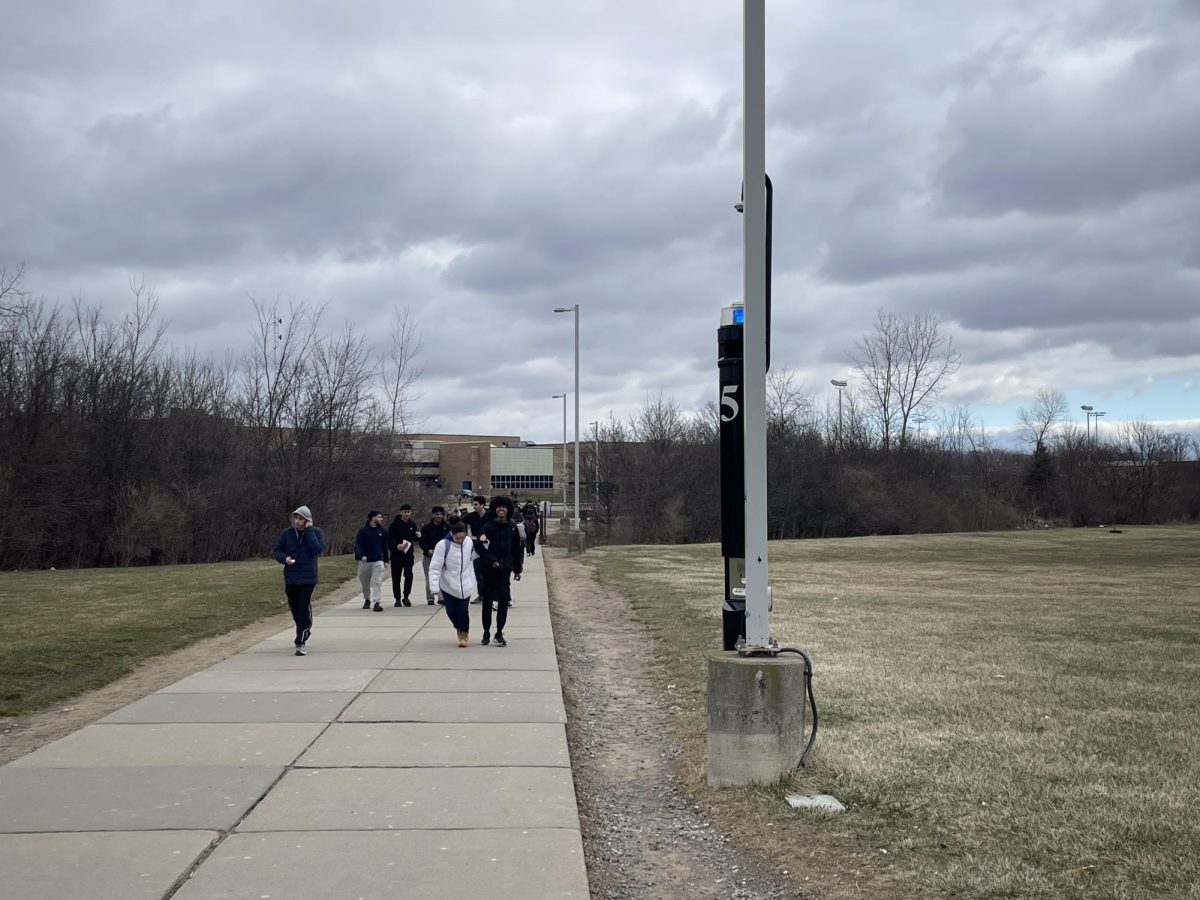
Cameras not only capture the inside of schools on campus, but the outside paths as well. “Other than classrooms and bathrooms [where cameras are not allowed], we can pretty much see everything,” Kolke said. “Cars in the back of the buildings here in the past, where the kids are walking, we will have a camera that’ll alert on that. That may have [the SROs to] look at it: ‘Is that somebody pulling into the loading dock, or is that somebody driving through, trying to hurt kids on the path?’”
While exhaustive camera placement is used by security on P-CEP’s campus and at other public buildings throughout the country to identify risks, some may see this technology as an invasion of privacy. The ACLU states, “The impulse to blanket our public spaces and streets with video surveillance is a bad idea. The growing presence of cameras will create chilling effects that bring subtle but profound changes to the character of our public spaces.”
Legal scholar Jonathan W. Penney argues in “Understanding Chilling Effects,” published by several sources including Minnesota Law Review and Harvard’s Berkman Klein Center, that “[c]hilling effects arise out of contexts of ambiguity and uncertainty—like the ambiguity of public or private sector surveillance—but have deeper psychological foundations as well. In moments of situational uncertainty, people conform to and comply with the relevant social norm in that context. Sometimes this means self-censorship, but most often it means more socially conforming speech or conduct.”
The Canton Township Police Department has made efforts to reduce potential “chilling effects” the presence of security can cause. “You’ll see us with an event like we just held last month, which is called ‘Touch a Truck,’ where we park some of our equipment out and we have people show up, and they get to see some that we use. The intent behind that is for them to be able to build understanding and build bridges,” Canton Township Interim Police Chief Joseph Bialy said. “We also have a community relations officer whose sole responsibility is to try and connect with the community on as many levels as they possibly can.”
Forming bonds between residents and police is important to many. “The [Canton Township] board of trustees are representatives of the community, and they support law enforcement and the goals that we do, especially when it comes to community relations and community-building,” Bialy said.
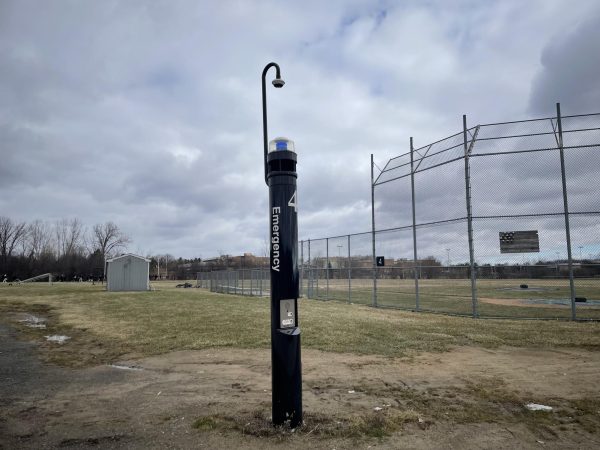
According to Bialy, the police would need a warrant to access any school security footage, but the police do work closely with schools. “We do have joint communication with the schools, so we do have an alert system that is in place if they need mutual aid,” he said.
Police have procedures for reacting to incidents in schools. “We have what’s called emergency operation plans that we would enact, in case there was some type of a critical incident at any type of a school, and so we have standardized responses that we would give,” Bialy said. “Our detectives and our command officers would all respond to be able to negotiate the incident.”
Bialy said that collaboration with Canton residents is important to him. “Here in Canton, we’ve always had great support from our residents, and that’s something that I’ve always valued, and that is truly a building block of our agency.”
Students can report suspicious activity to OK2SAY by calling 855-565-2729 or texting 652729.