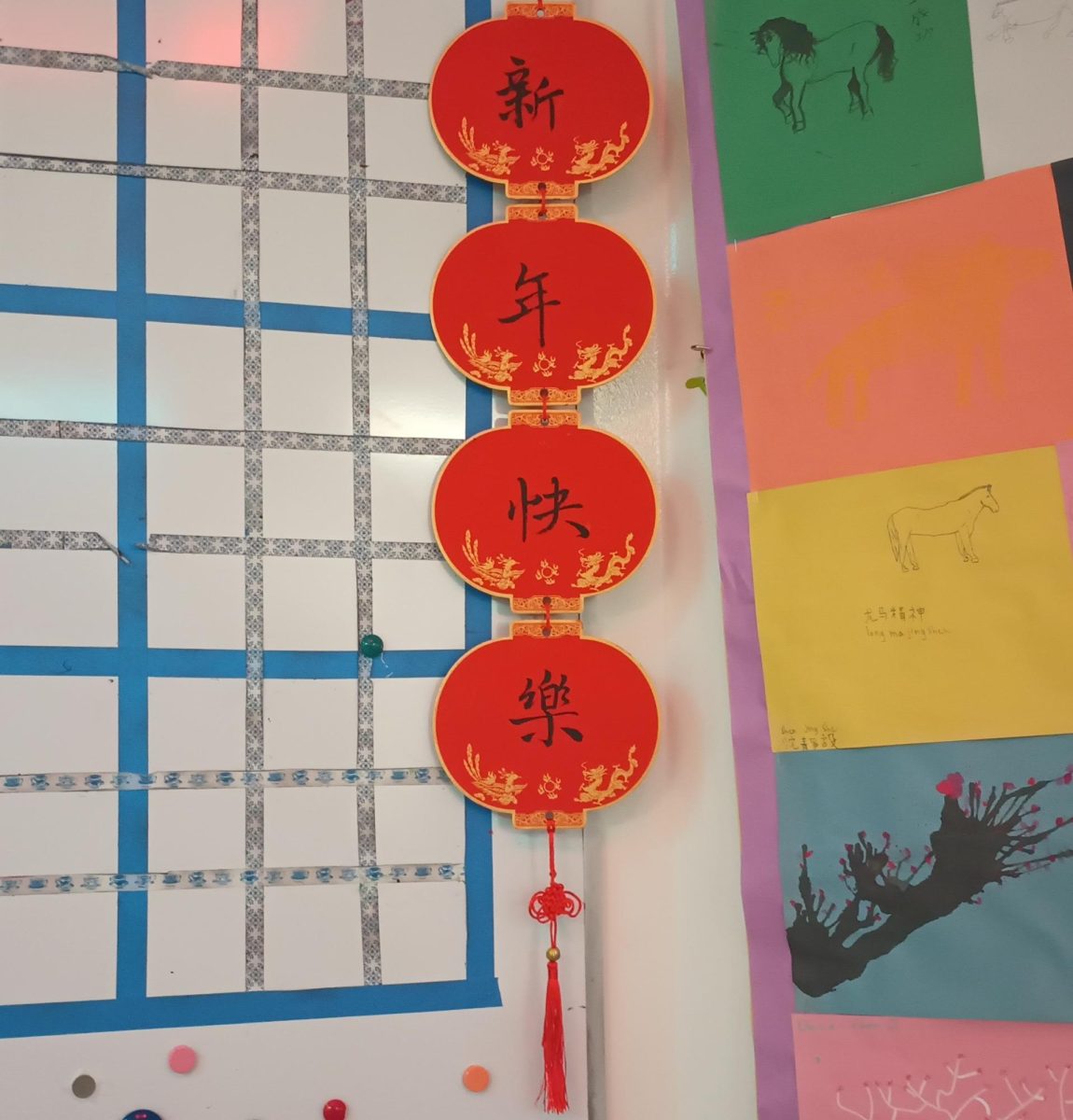
Firecrackers explode into the sky. Lanterns start to glow and families gather together to enjoy great food on the dinner table. For many in China, this is a tradition people often do during Chinese New Year. Across the Pacific here in the United States, some parts of the cultural experience is different, but the customs and traditions remain the same.
Chinese New Year is one of the most important holidays of the year on the lunisolar calendar and is widely celebrated across Taiwan, Vietnam, Indonesia and many other countries around the world in addition to China. Feb. 17, 2026, marks the beginning of the Year of the Horse (马年), a year noted for passion and ambition.
Li Zhang, Mandarin Chinese teacher at Canton, said that celebrating Chinese New Year feels different in China because the holiday is experienced on a larger scale. Many people tend to spend the holiday in groups rather than individually.
“In China you have the whole atmosphere,” said Zhang. “Everybody is celebrating. It’s very festive. It’s kind of like it’s in the air. We have the decoration. It’s a shared experience.”
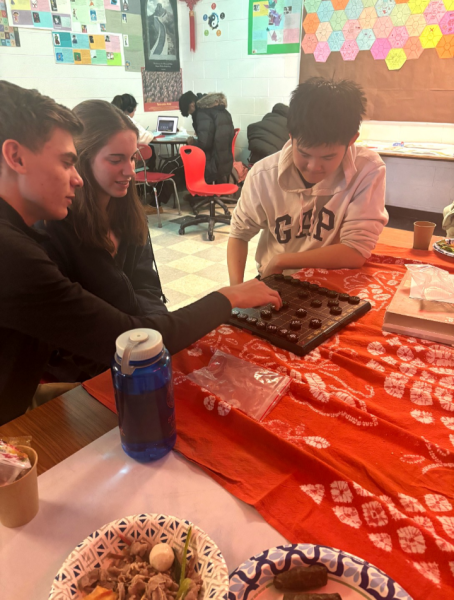
One student from Mandarin Chinese class, who is from China and remains anonymous, describes the typical scene of China during the holiday. She said that there are couplets hanging on doors to ward off evil and bring in good fortune.
“In my hometown, people set off firecrackers in the morning and fireworks at night,” she said (translated from Chinese). Traditionally, people hung up couplets and shot off fireworks to scare a dragon named Nián, (年) who attacked the people of the village in the legend, which Ms. Zhang taught her class when preparing for the Year of the Dragon in 2024.
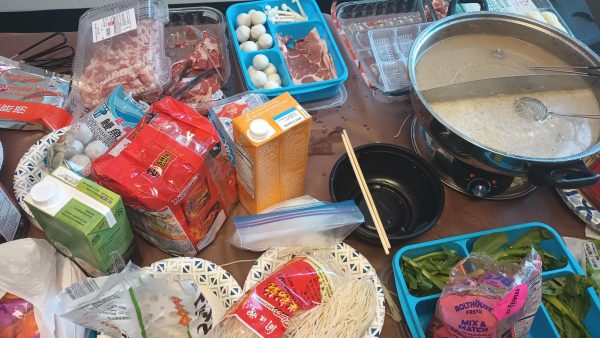
On Wednesday, Zhang hosted her annual hot pot (火锅) gathering for students to experience. Hot pot is a communal dish that contains multiple ingredients such as noodles, meat and vegetables.
Canton junior Brigid Reidy said that hot pot is one of her favorite activities in Chinese class she looks forward to the most. “Everybody just loves the food,” said Reidy. “One thing that I really did enjoy that we have been doing for the past, I want to say the three years that I’ve been in Mandarin, is decorating the hallway.”
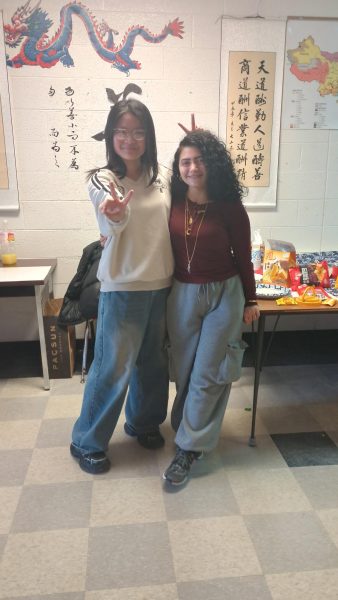
Along with activities like hot pot and decorating, Chinese New Year has traditions that have been passed down from generation to generation. Salem junior Jennifer Chen, whose family is Chinese, described how her family prepares and celebrates for Chinese New Year each year.
“Leading up to Chinese New Year we do decorations, and then on the day of we’ll have dinner all together,” said Chen. “Then after that, after dinner, we’ll usually have red envelopes (红包) to open and send WeChat messages to everybody who sent us red envelopes.”
Zhang said that understanding Chinese New Year is imperative for understanding authentic Chinese culture.
“For me, as a teacher, I feel students are learning the language and the culture is a big part of it,” said Zhang. “And Chinese New Year is the most important celebration in the culture. I want to create a little part of the celebration for students to experience.”